Symphonic Metamorphosis: Inside St. Vincent’s Transcendent New York Philharmonic Debut
Crossing Boundaries at David Geffen Hall
On July 2, 2026, St. Vincent stepped onto the stage at Wu Tsai Theater with songs her audience already knew, and a plan to make them sound newly discovered. Born Annie Clark, the six-time Grammy winner made her New York Philharmonic debut alongside conductor and arranger Jules Buckley. As guitars, melodies, and restless rhythms met the full force of an orchestra, her familiar catalog began opening into something larger.
Deconstructing a Master Catalog Across Eras
The Philharmonic described the collaboration as orchestral arrangements of St. Vincent's favorites and deep cuts. That framing kept attention on the songs themselves. Buckley was not presenting a separate classical program; he was reshaping Clark's existing music through the expanded colors and scale of an orchestra.
Selections came from across a catalog that includes Marry Me, Actor, Strange Mercy, St. Vincent, MASSEDUCTION, Daddy's Home, and All Born Screaming. Bringing those eras together gave the debut a clear purpose: hearing how one artistic voice could remain recognizable while its surroundings changed.
That continuity mattered because Clark's records span art pop, rock, electronic textures, and guitar-driven tension. The Philharmonic expanded that musical language without distracting from the songs themselves. Every element returned to one question: how could her music sound when reimagined through an orchestra?
Orchestral Architecture: Jules Buckley’s Collaborative Vision
The debut's drama came from that change in perspective. A song first built around guitar, rhythm, voice, or studio texture could now be carried by strings, brass, woodwinds, and percussion. The arrangement process did not need to erase the original version. Its value rested in revealing relationships among melody, harmony, atmosphere, and dynamics that studio production may balance differently.
Buckley stood at the center of that transformation. Known for building orchestral projects around contemporary artists, he served as conductor, orchestrator, and arranger for the performance. His task was both practical and creative: to connect the Philharmonic's instrumental range with Clark's established songwriting while ensuring that the concert remained unmistakably St. Vincent rather than an orchestra merely accompanying a guest.
That distinction gave the evening its narrative arc. The songs arrived with histories already attached to them, including years of recordings, performances, and listener memories. The orchestra created a new piece for that material. At David Geffen Hall, the focus remained on transformation within the catalog, showing that familiar music can take on a different scale without surrendering its authorship or identity.
A Lasting Evolution: The Legacy of a Symphonic Debut
As the final notes settled inside David Geffen Hall, the evening's achievement became clear. St. Vincent had not abandoned the songs that shaped her career. She had allowed them to breathe differently, revealing melodies, tensions, and emotions that could emerge only when her catalog met the New York Philharmonic.
That transformation gave the debut its lasting meaning. Growth did not require Clark to erase her past or chase an unfamiliar identity. It came from listening again, trusting collaboration, and giving established music room to evolve. Her songs left the stage still unmistakably hers, but with wider possibilities, a reminder that meaningful artistic growth begins when familiar work is brave enough to become new again

David Geffen Hall is a concert hall in New York City's Lincoln Center for the Performing Arts complex on Manhattan's Upper West Side. The 2,200-seat auditorium opened in 1962,

“Doing this orchestra stuff was almost a career retrospective, because it forced me to look back on records that I don't revisit... It feels very heartening to look back and go, ‘I went a lot of places and I've made a lot of music, and now it can translate to this larger forum.’”

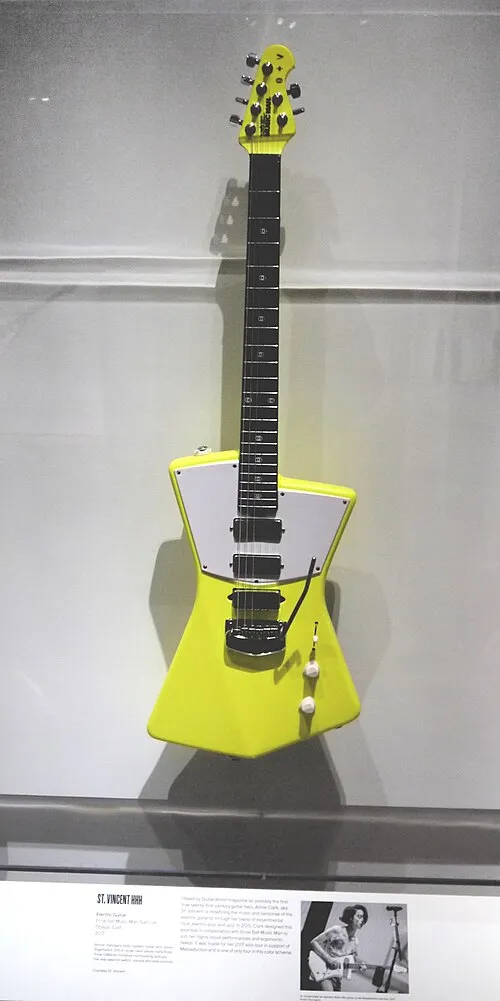

The New York Philharmonic is an American symphony orchestra based in New York City. Known officially as the Philharmonic-Symphony Society of New York, Inc.,
St. Vincent, aka Annie Clark, reimagined her catalog in a New York Philharmonic debut, showcasing her songs through orchestral arrangements while preserving their original essence.
- St. Vincent collaborated with the New York Philharmonic, reinterpreting her music through orchestral arrangements that expanded its musical language.
- Conductor Jules Buckley reshaped Clark's existing music, ensuring that the orchestral versions remained true to the original songs' identity.
- The performance highlighted the versatility of St. Vincent's catalog, demonstrating how familiar songs can evolve while maintaining their authorship.