The Spiritual Shift: How Caravanserai Redefined Santana’s Legacy
Santana's 1972 album Caravanserai stands as one of the boldest turning points in the band's history, moving far beyond the Latin rock sound that first made them famous after Woodstock. Instead of chasing radio-friendly hits, guitarist Carlos Santana pushed the group toward something more spiritual, experimental, and deeply influenced by jazz.
Before reaching that point, Santana had already become one of the biggest rock acts in America. Their explosive performance at the Woodstock Music & Art Fair instantly introduced audiences to the band's distinctive blend of rock guitars and Afro-Cuban percussion.
Bridging Borders and Blueprints
Carlos Santana's upbringing also shaped that sound. Raised first in Autlán and later in Tijuana, Mexico, he learned violin from his father before turning to guitar and becoming obsessed with blues legends like B.B. King, Jimmy Reed, and Muddy Waters.
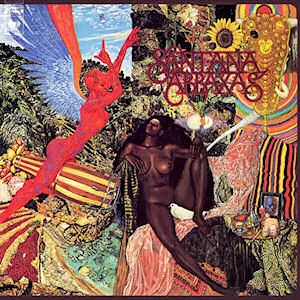
After moving to San Francisco's Mission District, Santana absorbed the city's booming rock scene while also discovering Latin music icons such as Tito Puente, Eddie Palmieri, and Ray Barretto. That fusion helped Santana stand apart from other late-1960s rock bands. Albums like Abraxas and Santana III became huge commercial successes, while Carlos developed one of rock's most recognizable guitar tones.
A Quest for Jazz and Enlightenment
Still, by the early 1970s, Carlos Santana felt creatively restless. Jazz records by Miles Davis and John Coltrane completely changed his musical outlook. Davis' Bitches Brew especially opened the door to more experimental jazz-rock sounds. At the same time, Santana became deeply interested in spirituality and Eastern philosophy after reading books like Autobiography of a Yogi.
Those influences directly shaped Caravanserai. The album title itself refers to roadside resting places used by ancient caravans, symbolizing life as part of a larger spiritual journey. Santana rebuilt the band with new musicians, including bassist Doug Rauch and percussionists James "Mingo" Lewis and Armando Peraza. Only three songs featured vocals, showing how far the band had shifted away from conventional rock songwriting.
Defying the Hit-Maker Mold
Musically, the album flows more like a spiritual exploration than a collection of singles. Songs such as "Eternal Caravan of Reincarnation" and "Waves Within" emphasize atmosphere, percussion, and improvisation over traditional hooks.
Tracks like "Song of the Wind" showcased Carlos Santana's emotional guitar playing, while "Future Primitive" and "La Fuente del Ritmo" leaned heavily into layered rhythms and Afro-Cuban percussion. The album also included a reworked version of Brazilian composer Antônio Carlos Jobim's "Stone Flower."
Not everyone immediately understood the direction Santana had taken. Clive Davis reportedly worried there was not "one single within a thousand miles" of the album. Despite those concerns, Caravanserai eventually earned major critical praise and became one of Santana's most respected records.
Released on the same day as Miles Davis' On the Corner, the album cemented Santana's transition from hitmaking rock star into a more adventurous jazz-rock artist willing to ignore commercial expectations.
Most people are prisoners, thinking only about the future or living in the past. They are not in the present, and the present is where everything begins.

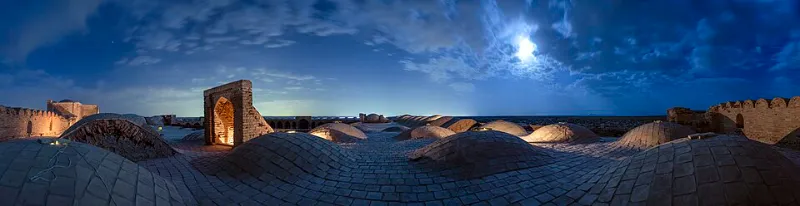
Stretching across the vast landscapes of ancient Persia, the Iranian caravanserai served as the essential backbone of the Silk Road. These fortified roadside inns were strategically placed every 20 to 30 miles—the distance a camel train could travel in a single day. Architecturally, they are renowned for their massive masonry, central courtyards, and symmetrical iwans, designed to provide safety and rest for weary merchants and livestock alike. Today, dozens of these historic structures, spanning from the Sassanid to the Safavid eras, are recognized as UNESCO World Heritage sites, standing as enduring monuments to global trade and cultural exchange.
Carlos Santana's 1972 album Caravanserai marked a bold shift from his signature Latin rock sound towards a more spiritual and experimental jazz-influenced style.
- Santana's Caravanserai moved the band away from commercial rock hits towards a more spiritual and experimental sound, inspired by jazz and Eastern philosophy.
- The album's structure and focus on atmosphere, improvisation, and percussion represented a departure from traditional rock songwriting.
- Despite initial concerns about commercial viability, Caravanserai received critical acclaim and solidified Santana's reputation as an innovative jazz-rock artist.